Industrial Refrigeration Lifecycle Cost: The True Cost of Ownership

When planning an industrial refrigeration project, upfront cost often receives the most attention. New facilities, expansions, and system upgrades require significant capital investment, making it natural to compare bids and focus on initial pricing.
However, industrial refrigeration systems are long-term assets. Many operate continuously for decades, making the purchase price only a small portion of the total cost of ownership.
The more important question is not, "What does this system cost today?" It is, "What will this system cost to own, operate, maintain, and expand over the next 20 to 30 years?"
Understanding lifecycle cost helps facility owners and general contractors make better investment decisions that continue delivering value long after project completion.
What Industrial Refrigeration Lifecycle Cost Really Means
Lifecycle cost includes every major expense associated with a refrigeration system throughout its operating life. This includes engineering, equipment, installation, energy consumption, maintenance, repairs, compliance, downtime, modernization, and future expansions.
The purchase price is only the beginning of the industrial refrigeration total cost of ownership.
Refrigeration also has a direct effect on production, product quality, process stability, and daily operations. In food processing, pharmaceutical manufacturing, cold storage, and other mission-critical facilities, system performance affects costs far beyond the refrigeration system itself.
For this reason, owners should view industrial refrigeration not simply as a construction expense alone, but as a long-term business investment.

A Proposal Tells Only Part of the Story
Two refrigeration proposals may specify similar equipment capacities and operating conditions while delivering very different long-term results.
The differences often lie in the engineering decisions behind the system. Equipment selection, piping layout, controls integration, service accessibility, energy optimization, and provisions for future expansion all influence how the system performs after startup. These considerations may have little impact on the initial bid, but they can significantly affect operating costs throughout the life of the system.
Many of these same considerations also influence contractor selection. To learn more about evaluating refrigeration proposals beyond equipment and pricing, read our article, How to Choose a Refrigeration Contractor: Reading Beyond the Proposal.
Reliability Protects Production and Product Quality
Industrial refrigeration supports far more than temperature control. It protects inventory, production schedules, food safety, process stability, and customer commitments.
Unexpected downtime can quickly become expensive. A cold storage warehouse may face product loss. A food processor may experience production interruptions. A pharmaceutical manufacturer may lose a critical production batch. Mission-critical facilities may experience operational disruptions that extend well beyond the refrigeration system itself. Even relatively minor equipment issues can increase overtime labor, emergency service costs, and maintenance demands.
Well-engineered refrigeration systems are designed around a facility's operating profile, production schedule, product mix, and future growth plans. This improves long-term reliability while reducing operational disruptions and making maintenance more predictable.

Energy Efficiency Drives Long-Term Value
Energy is one of the largest operating expenses in industrial refrigeration. Because these systems often operate around the clock, even modest improvements in industrial refrigeration energy efficiency can generate substantial savings over the life of the facility.
Compressor sequencing, variable frequency drives, evaporator controls, defrost optimization, floating head pressure control, equipment selection, pipe sizing, heat exchanger performance, and controls integration all influence system efficiency. The optimal design depends on the facility's application, operating profile, and production requirements.
However, energy optimization does not end at startup. Operating conditions change over time as production demands, ambient temperatures, and facility requirements evolve. Continuously monitoring system performance allows operators to identify inefficiencies, optimize equipment operation, and uncover additional opportunities to reduce energy consumption.
Innovative supports these efforts through advanced controls and energy management solutions, including SiteSense, which provides real-time system monitoring, performance analytics, and energy optimization tools that help facilities improve operational efficiency and reduce long-term operating costs.
Designing for efficiency from the beginning, while continuously optimizing system performance throughout the life of the system, delivers the greatest long-term value.
Safety, Compliance, and Maintainability Matter
Long-term ownership costs are also influenced by safety, compliance, and maintainability.
Good refrigeration system design considers service access, valve labeling, controls integration, ventilation, relief systems, documentation, and mechanical integrity from the beginning of the project.
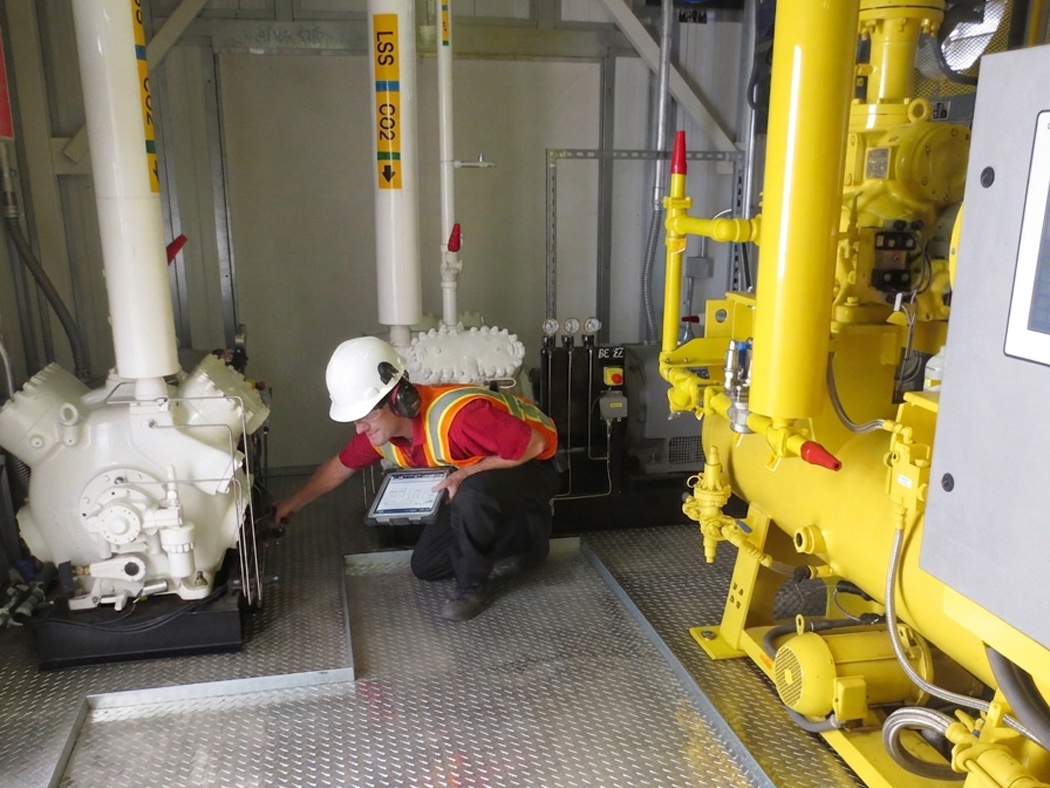
Equipment that is difficult to inspect or service often results in longer outages, higher labor costs, and increased maintenance expenses throughout its operating life. Combined with a proactive Service & Maintenance program, thoughtful system design helps facilities improve reliability, simplify maintenance activities, and reduce long-term operating costs.
Project Delivery Shapes Long-Term Performance
Even the best refrigeration system design depends on proper execution. Engineering, manufacturing, controls integration, installation, commissioning, and startup all influence how a system performs throughout its operating life.
A coordinated project delivery approach helps reduce communication gaps between engineering, manufacturing, construction, and commissioning while improving consistency from design through startup. The result is a system that is better positioned to perform as intended for years to come.
Successful project delivery does more than support a smooth startup. It influences system reliability, maintainability, energy performance, and the total cost of ownership for years after construction is complete.
The True Cost of Ownership
The lowest upfront cost and the lowest total cost of ownership are rarely the same.
A refrigeration system's long-term value is determined by far more than the equipment specified in the proposal. Reliability, energy efficiency, maintainability, serviceability, compliance, controls integration, and project execution all influence how the system performs throughout its service life.
Industrial refrigeration systems are expected to operate reliably for decades. Evaluating them based solely on initial purchase price overlooks many of the costs that have the greatest impact over time.
A well-designed refrigeration system does more than provide cooling capacity. It protects products, supports operations, adapts to future growth, and helps control long-term operating expenses.
The true cost of ownership is measured not only by what a refrigeration system costs to build, but by how reliably, efficiently, and economically it performs for years to come.