
Engineering Consulting
Engineering consulting services provide objective, system-level guidance for industrial refrigeration facilities. These services support owners and operators who need experienced engineering insight to evaluate existing systems, plan future investments, or develop new facility concepts.

Value Engineering Driven by Experience
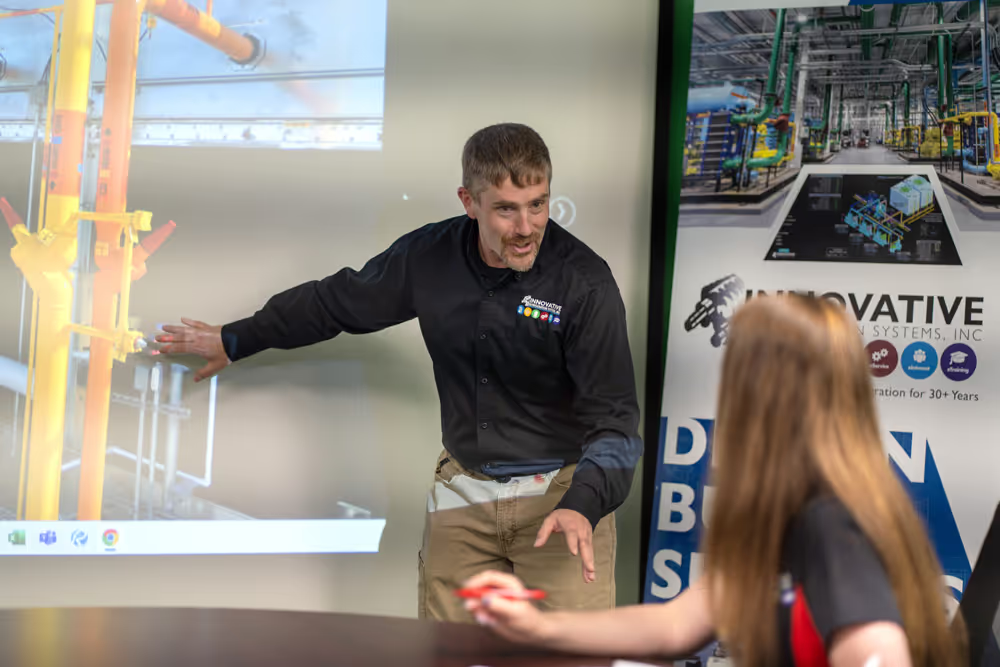
Engineering consulting is guided by value engineering principles developed through decades of real-world system design and execution. Each system is evaluated to determine what is required for the application, rather than defaulting to conservative or overengineered solutions.
This approach prioritizes:
Right-sized equipment selection
Efficient system architecture
Operational simplicity
Long-term reliability and serviceability
Energy performance over the life of the system
By applying experience across a wide range of systems, applications, and operating environments, consulting recommendations are practical, defensible, and aligned with how facilities actually operate.
On-Site System Inspections and Assessments
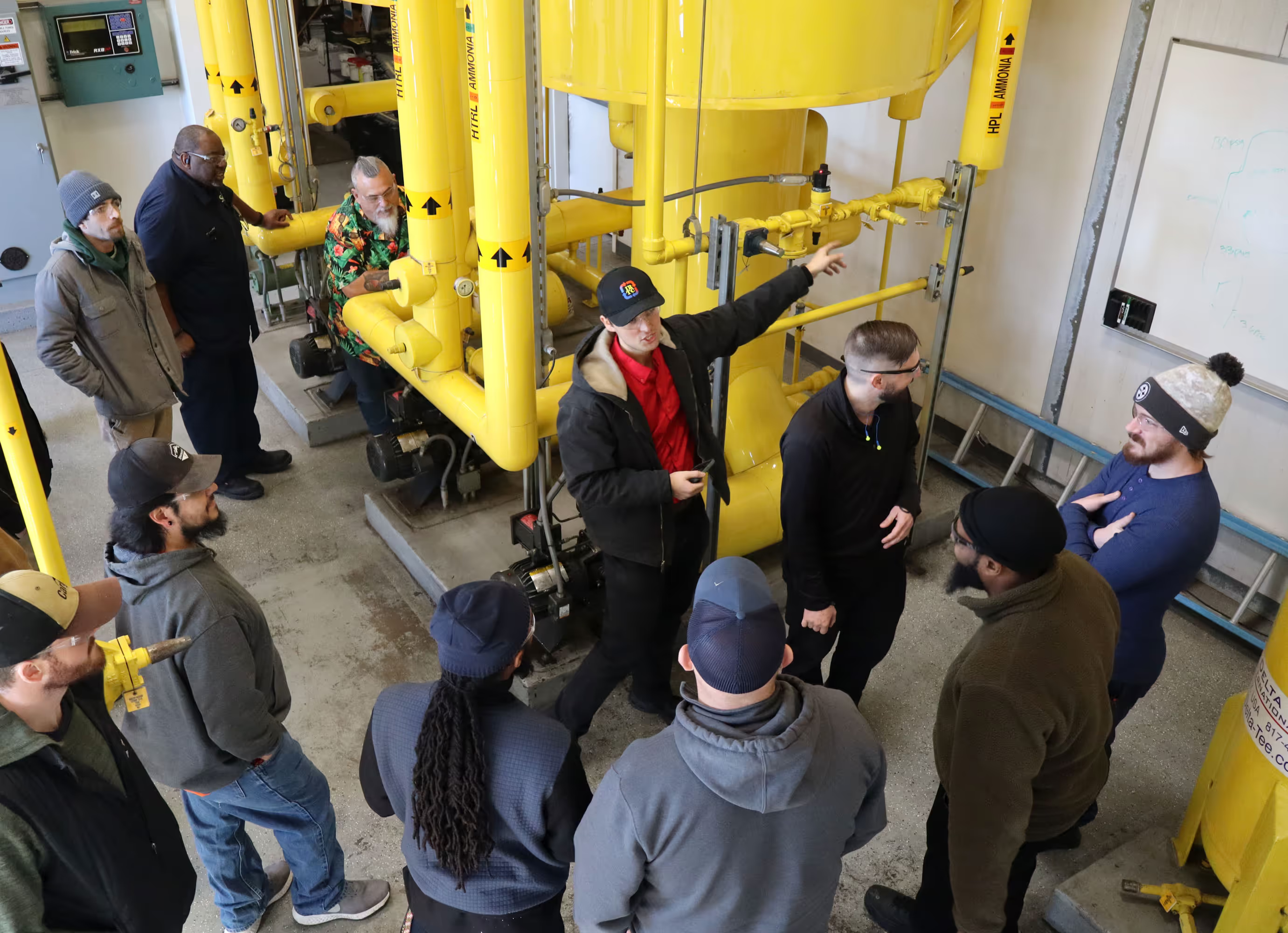
On-site assessments provide direct insight into system condition, performance, and operational risk. Engineers observe system behavior under real operating conditions and inspect key components to identify inefficiencies, limitations, or areas of concern.
On-site assessments may include:
Mechanical and electrical equipment condition reviews
Evaluation of control strategies, sequencing, and setpoints
Assessment of system capacity, redundancy, and operational margins
Review of safety systems and refrigerant management practices
Identification of maintenance, operational, or design-related risks
Findings are documented clearly and prioritized to support informed decision-making.
System Performance and Optimization Reviews
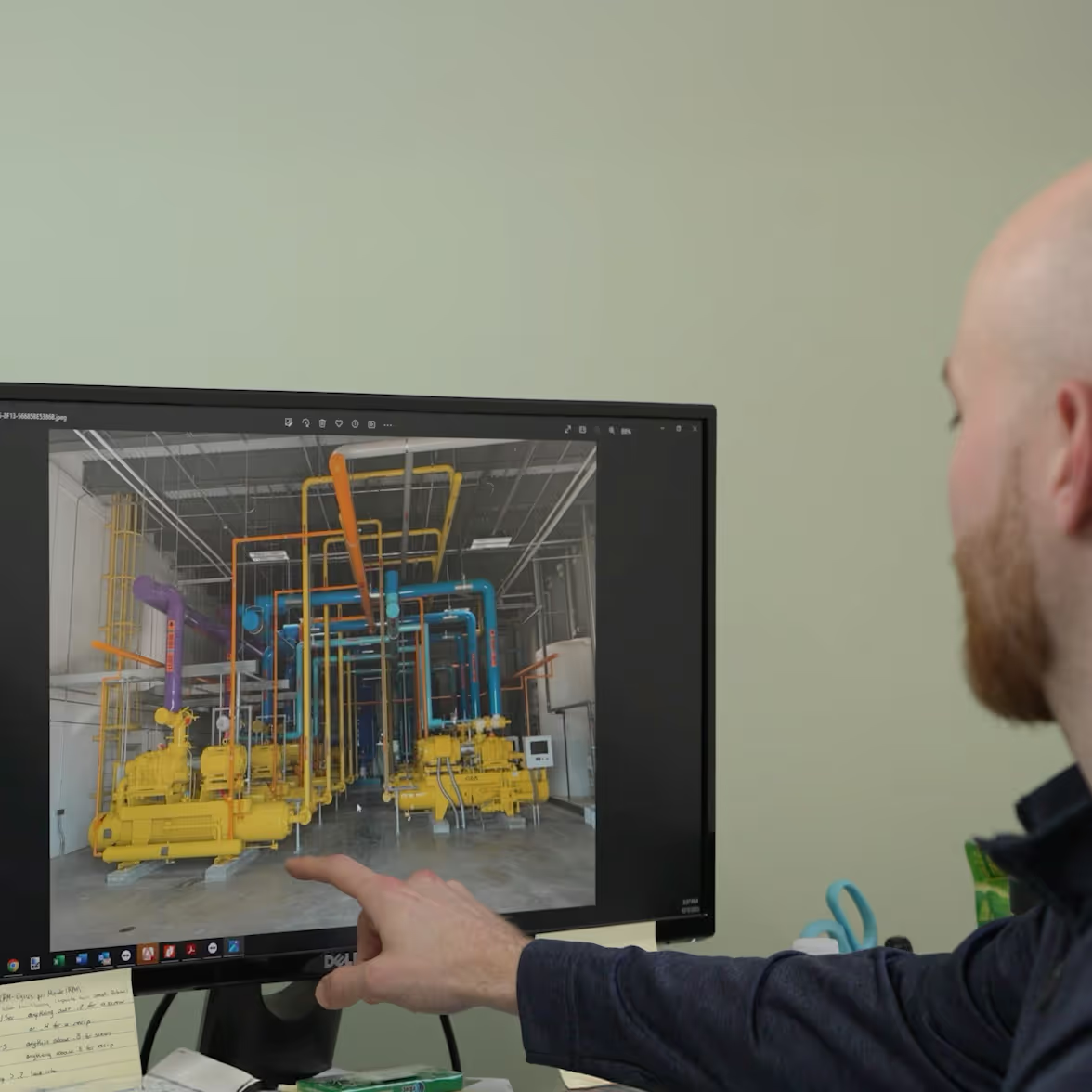
Performance-focused consulting evaluates how refrigeration systems respond to load changes, ambient conditions, and production demands. These reviews identify opportunities to improve efficiency, stability, and throughput without compromising reliability.
Reviews may address:
Compressor, condenser, and evaporator staging strategies
Capacity utilization and load distribution
Control logic effectiveness and opportunities for refinement
Energy usage drivers and operational inefficiencies
Recommendations are developed with a focus on measurable improvements and realistic operating constraints.
Concept Development and Alternate System Design
Engineering consulting frequently supports early-stage planning and concept development for new facilities, expansions, and retrofits. Engineers develop layouts, select equipment, and evaluate system architectures based on site conditions, operational goals, and budget considerations.
Where appropriate, alternate system concepts may be developed to:
Reduce capital cost
Improve energy efficiency
Simplify operation and maintenance
Improve long-term system flexibility
This approach helps facilities move projects forward with confidence and avoid unnecessary complexity or cost.

Expansion, Retrofit, and Long-Term Planning Support
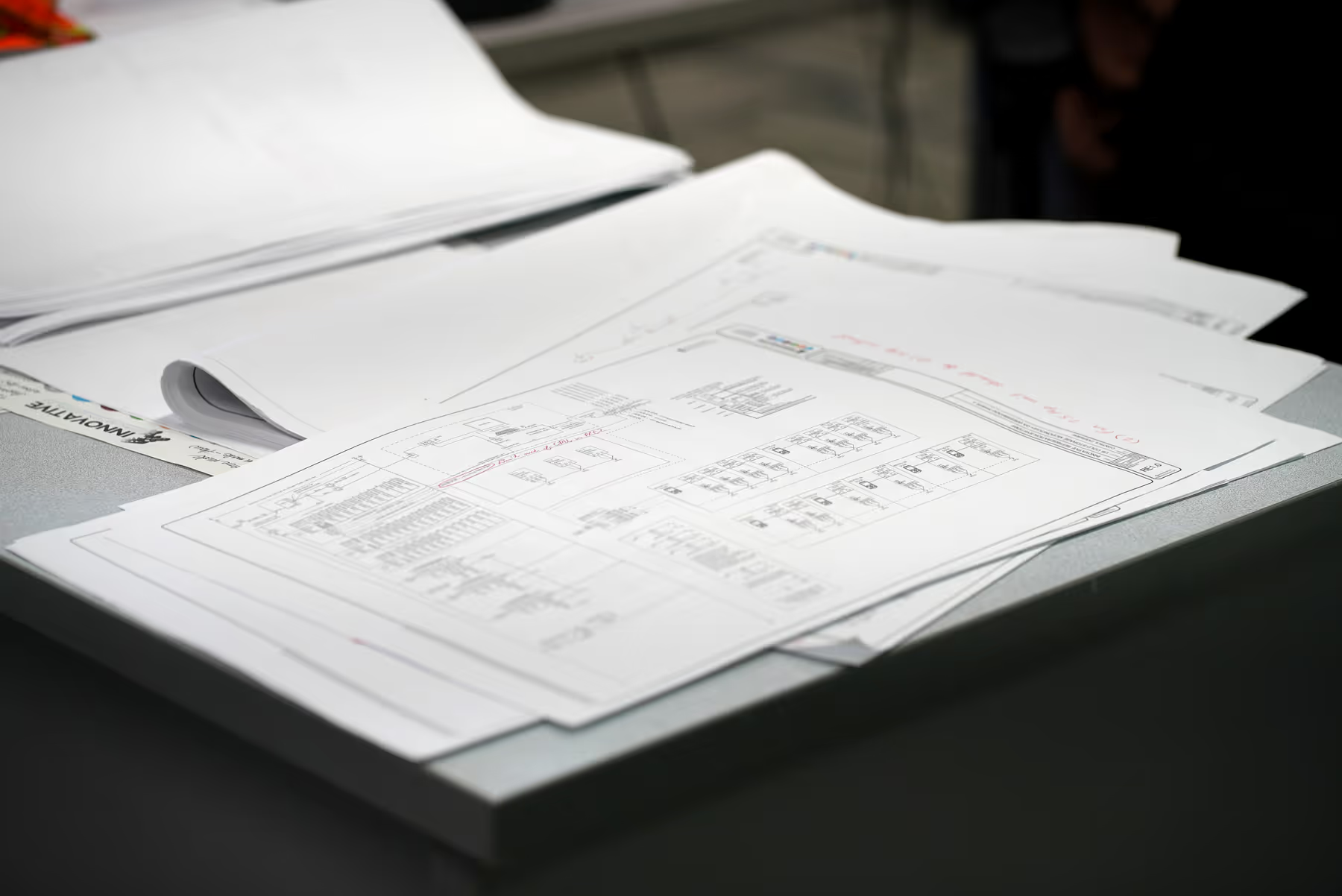
Consulting services support phased expansions and retrofit planning for operating facilities. Engineers evaluate existing infrastructure to determine how additional capacity, new equipment, or updated controls can be integrated with minimal disruption.
Planning support may include:
• Evaluation of existing system limitations
• Identification of infrastructure constraints
• Concept-level recommendations for phased upgrades
• Risk assessment for construction and commissioning
This planning helps facilities align near-term needs with long-term operational goals.
Planning support may include:
Reduce capital cost
Improve energy efficiency
Simplify operation and maintenance
Improve long-term system flexibility
Safety and Compliance Considerations
Engineering consulting includes evaluation of system safety and regulatory requirements. Engineers review system architecture, operating practices, and documentation to identify gaps related to applicable codes and standards.
Safety-focused consulting may include:
• Review of process safety and mechanical integrity considerations
• Evaluation of refrigerant charge management strategies
• Documentation and compliance gap assessments
• Recommendations to improve operational clarity and system safety
Safety-focused consulting may include:
Review of process safety and mechanical integrity considerations
Evaluation of refrigerant charge management strategies
Documentation and compliance gap assessments
Recommendations to improve operational clarity and system safety

All CapabilitIes
Explore all of our capabilities.
Cold Storage
Food Processing
Blast Freezing
Individual Rack Freezing
Process Cooling
Hygienic Air SYSTEMS
Industrial Ice MANUFACTURING
Dehumidification
Ripening SYSTEMS
Chillers
Data Center Cooling
Pharmaceutical Manufacturing
Petrochemical & Refinery Cooling
District Heating & Cooling
Automotive Manufacturing
Air Doors
Electrical Design
Specialty Process
Frequently asked questions
Choosing the right industrial refrigeration system depends on a variety of factors. To discuss the potential of your needs, we suggest you talk to one of our refrigeration system experts.
Our refrigeration systems are engineered with precision, reliability, and adaptability. We integrate intelligent controls, nationwide service, and cutting-edge design to deliver reliable performance across complex industrial environments.
Every project receives a tailored approach. We analyze your specific operational requirements, environmental conditions, and performance metrics to design refrigeration systems that maximize efficiency and minimize downtime.
We specialize in refrigeration solutions for cold storage warehousing, food and beverage processing, pharmaceutical manufacturing, mission critical and other industrial sectors requiring precise temperature control and reliability.
Safety is our priority. We maintain SHARP (Safety Health Achievement Recognition Program, through OSHA) certification, implement rigorous Process Safety Management protocols, and design systems that meet the highest industry standards for operational integrity and environmental responsibility.