
Engineering
& System Design
Industrial refrigeration systems are engineered to perform for decades, not just at startup. Engineering and system design are approached with a full understanding of how systems will be fabricated, installed, operated, maintained, and expanded over time.

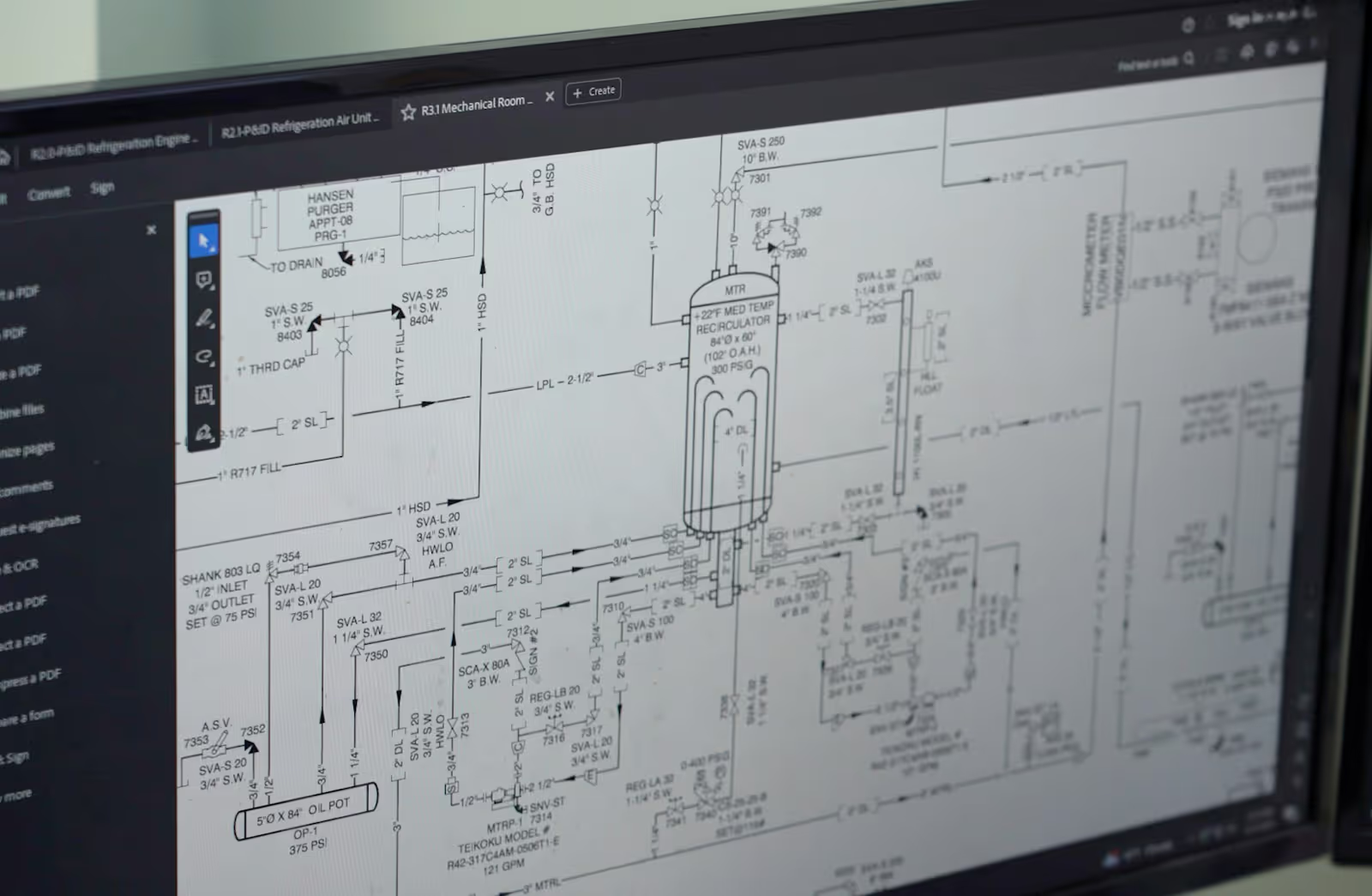
Mechanical Engineering
Mechanical engineering forms the foundation of every industrial refrigeration system. Mechanical designs are developed around real operating conditions, facility constraints, and long-term performance requirements, not theoretical loads.
Systems are custom engineered using natural refrigerants including ammonia and CO₂, with layouts that prioritize accessibility, serviceability, and safe operation. Designs account for heat loads, traffic patterns, defrost strategies, and future capacity needs to ensure stable performance under real-world conditions.
Key mechanical design considerations include:
Value engineering to balance performance, efficiency, and capital cost
Built-in redundancies for critical equipment and system components
Refrigerant isolation through mechanical enclosures and system zoning
Equipment layouts that support safe access, inspection, and maintenance
Designs that accommodate expansion, retrofits, and operational changes
Electrical Engineering & Power Distribution
Industrial refrigeration electrical systems must support continuous operation, safe performance, and long-term flexibility. Electrical engineering is developed as an integrated part of the refrigeration system, not as a standalone utility.
Complete power distribution systems are designed to support compressors, condensers, evaporators, pumps, and auxiliary equipment across complex facilities. Electrical design emphasizes proper equipment sizing, coordinated protection, and clear separation between power, control, and safety circuits.
Electrical engineering capabilities include:
Power distribution design for large-scale refrigeration systems
Load analysis and demand planning for present and future capacity
Redundancy strategies for critical electrical components
Integration with in-house UL-listed control panel manufacturing
Coordination with mechanical layouts to reduce installation complexity
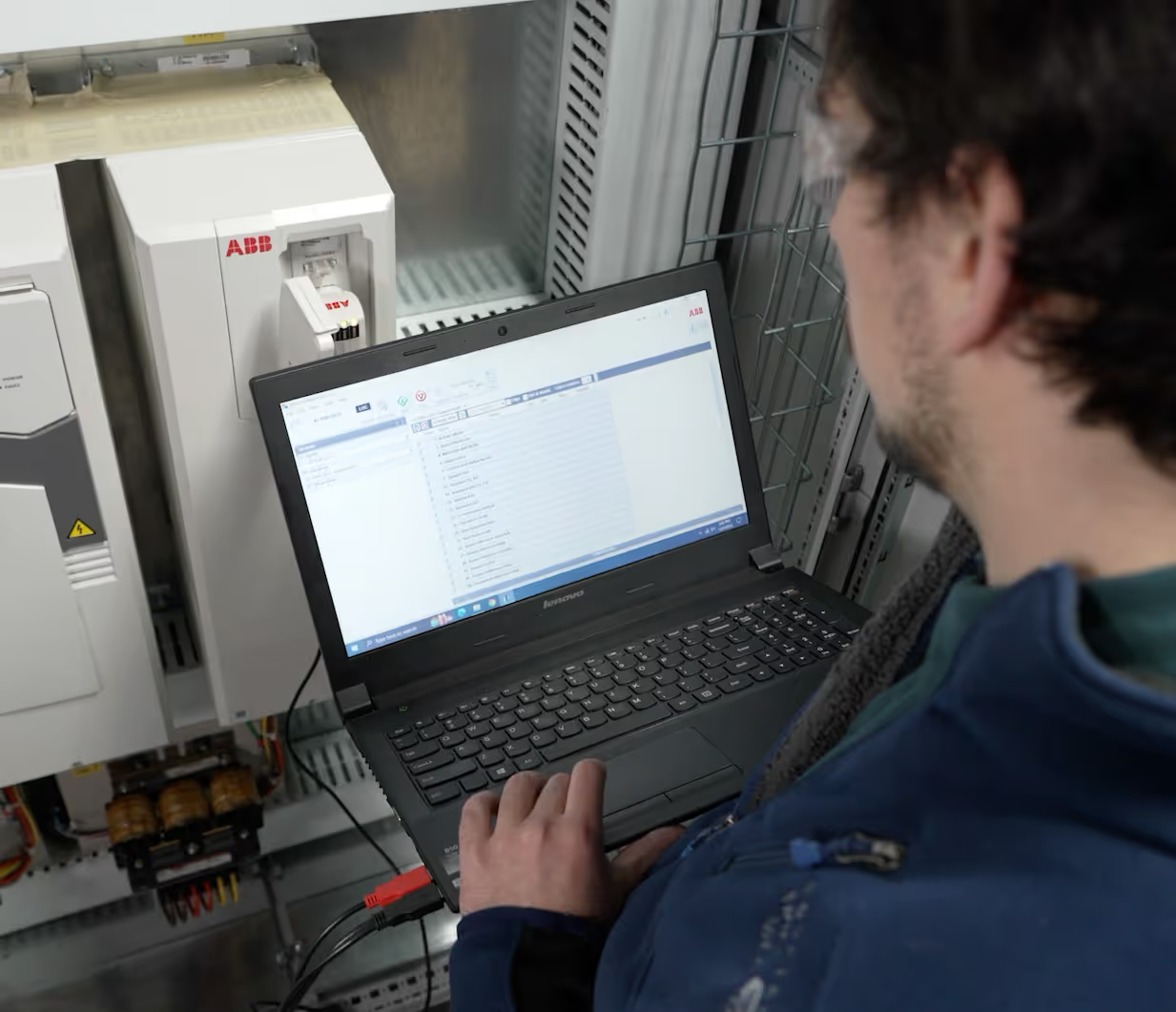
Platforms supported include industry-leading automation and power systems from Honeywell, ABB, Siemens, and Rockwell Automation.



.svg)
Controls & Automation
Controls engineering connects mechanical and electrical systems into a single, intelligent refrigeration platform. Control strategies are designed to maximize reliability, efficiency, and operational visibility while reducing manual intervention.
System logic is developed to manage machine sequencing, capacity control, and fault response in real time. Advanced strategies such as wet-bulb control, variable speed drives, and staged equipment operation are used to optimize performance across changing ambient and load conditions.
Controls engineering is tightly integrated with mechanical and electrical design to ensure sensors, valves, drives, and safety systems work together as intended.
Controls and automation design focuses on:
Intelligent machine sequencing and capacity control
Wet-bulb optimization for condenser performance
Variable speed drive integration for compressors, pumps, and fans
Alarm management and fault response strategies
System architectures that support remote monitoring and diagnostics
Reliability, Safety, and Long-Term Performance
Engineering decisions are guided by reliability, safety, and lifecycle performance from the outset. Redundancy is applied where it adds operational value, and safety considerations are integrated directly into system architecture rather than treated as afterthoughts.
Mechanical enclosures, refrigerant isolation strategies, and coordinated safety systems are used to support safe operation while maintaining performance and efficiency. Designs align with applicable codes, standards, and best practices while remaining practical to operate and maintain.
Mechanical Engineering
Coordinated directly with electrical, controls, manufacturing, and construction teams ensuring system designs reflect how equipment will be fabricated, installed, commissioned, and serviced.
Electrical Engineering
Engineered to support uptime, simplify maintenance, and integrate cleanly with controls and plant operations.
Controls Engineering
Designed to support both initial commissioning and long-term operation, allowing facilities to adapt to changing demands without reengineering the entire system.
All CapabilitIes
Explore all of our capabilities.