
SiteSense Pinpoints a Passing Valve and Eliminates $15,000 in Annual Energy Waste

Overview
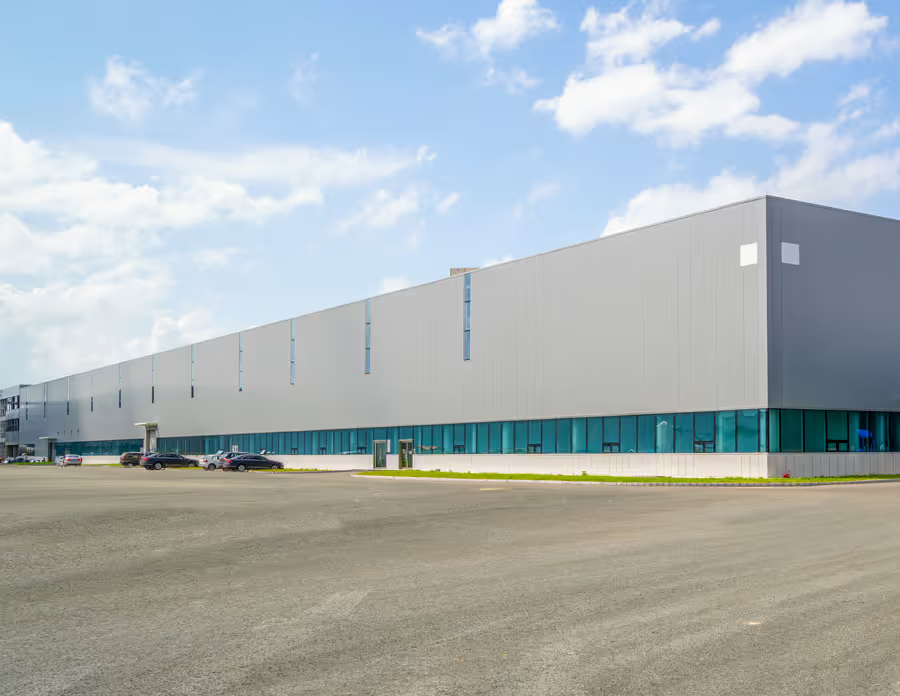
A large U.S. distribution facility operating low-temperature industrial refrigeration systems adopted the SiteSense AI-driven digital twin platform to improve visibility into system performance. The platform’s anomaly detection capabilities identified discrepancies between expected and actual equipment behavior, revealing deviations in compressor load profiles. This insight triggered targeted troubleshooting that stabilized operations and reduced energy costs.
"The SiteSense digital twin monitoring platform was able to pinpoint a passing valve and eliminate $15,000 in annual energy waste."
Energy challenges
The facility faced rising utility costs, intermittent compressor instability, and limited visibility into evaporator performance, which are common issues in aging ammonia systems. SiteSense addresses these challenges by introducing a physics-based digital twin that reconstructs system thermodynamics in real time and enables continuous monitoring of compressor and evaporator performance. The analysis revealed abnormal suction behavior and compressor loading patterns, pointing to a potential mechanical fault.
Championing an energy initiative
Compressor level analytics identified suction pressure swings and load spikes inconsistent with expected operation. Further analysis showed an evaporator generating load despite no cooling demand. Investigation revealed a passing hot gas valve leaking high-pressure vapor into the coil while commanded closed. This created artificial load on the suction header, forcing rapid compressor load/unload cycling and unnecessary energy consumption.
Corrective actions implamented
1. Repaired Passing Valve: Eliminated unintended vapor flow, stabilized suction pressure, and restored normal compressor operation.
2. Evaporator Optimization: Adjusted various control setpoints to reduce cycling and improve stability.
3. AI-Driven Monitoring: Digital twin analytics now continuously validate performance and flag early deviations.

Creating a lasting impact
Once the passing valve was repaired, the refrigeration system returned to stable operating conditions. Suction pressure fluctuations were significantly reduced, VFD operation stabilized, and overall compressor energy consumption declined. By combining digital twin analytics with traditional mechanical diagnostics, the facility can now detect inefficiencies earlier and prevent future performance drift. Continuous monitoring enables a more proactive approach to energy management and equipment reliability. As a result of these improvements, the facility achieved an estimated annual energy savings of 135,780 kWh, equivalent to approximately $14,935 in avoided electricity costs.

