The Industry's Answer to Synthetic Refrigerant Legislation

Natural refrigerant systems are changing the landscape for industrial facilities across the United States, and the transition is accelerating fast. Naturally occurring refrigerants like ammonia (R-717), CO₂ (R-744), and propane have served the industry for over a hundred years. They break down into basic elements like nitrogen, hydrogen, carbon, and oxygen, and carry Global Warming Potential (GWP) values ranging from 0 to 1. Today, as legislation tightens around synthetic hydrofluorocarbons (HFCs), and as we learn more about the potential environmental impacts of hydrofluoroolefins (HFOs), the time-tested natural options are finding new momentum across a wide range of applications.

Why Synthetic Refrigerants Are on Their Way Out
For decades, synthetic refrigerants occupied the default position in many facilities, largely because of the perceived hazard profile of ammonia and propane. That perception is now colliding with a harder set of facts. Synthetic HFCs carry extremely high GWP values and contain PFAS chemicals. The primary concerns surrounding HFO refrigerants center on their higher cost and emerging environmental questions related to the formation and persistence of trifluoroacetic acid (TFA) in the ecosystem. In Europe, these refrigerants are widely banned. Regulators there recognize them as cancer-causing "forever chemicals" that leach into groundwater. Natural refrigerant regulations in the United States have followed that lead, with federal legislation phasing out synthetic refrigerants over time. California has already gone further, banning them outright in large industrial facilities.
The consequences for facilities still running synthetic systems are significant. Rapidly shifting regulations drive up refrigerant costs, render existing equipment obsolete, and force more frequent and expensive equipment replacement cycles. Natural refrigerant systems, by contrast, face no such regulatory headwinds. Their future is secure.

Recent Technology Has Widened the Playing Field
One of the most significant recent developments is the rise of transcritical CO₂ systems. Not long ago, CO₂ was considered viable only in select low-temperature applications. Advances in compressor technology, controls integration, and system design have made transcritical CO₂ a competitive solution across a much broader set of markets. For companies with corporate Environmental, Social, and Governance (ESG) directives requiring the phase-out of synthetic refrigerants, this expansion of viable natural options is well timed.
What Natural Refrigerant Regulations Mean for Your Facility
Natural refrigerant regulations vary by state, industry, and charge size, but the direction is consistent everywhere: synthetic refrigerants are on their way out, and facilities that plan ahead avoid the disruption of emergency compliance transitions. Ammonia and CO₂, each carry a clear regulatory path forward, making them the practical choice for any long-term capital investment in refrigeration infrastructure.
EPA’s ongoing implementation of the AIM Act continues to push the market away from high-GWP HFCs through its AIM Act phasedown and Technology Transitions program. As IIAR notes, the rule details may continue to evolve, but the long-term direction is still clear: facilities should plan around compliant, lower-GWP refrigerant strategies.
Pharmaceutical Applications: Tight Tolerances, Natural Solutions
Life Sciences or Pharmaceutical industrial refrigeration demands extremely precise temperature and humidity control. CO₂ checks every box for these environments: a GWP of 1, non-toxic, and inherently stable. Innovative's modular penthouse units use CO₂ as the primary refrigerant, tightly integrated with controls systems that are 21 CFR Part 11 compliant. A temperature grid throughout the room ensures optimal temperature profiles in every area, even the corners that conventional systems miss.
These penthouses connect through piping to a modular compression package fabricated and shipped directly to the facility. Heat rejection can route through a central chilled water loop or through an integrated stand-alone condensing package. Because of the modular design, the required redundancy is straightforward to incorporate and cost-effective to build in from the start.

Processing Applications: Power, Speed, and the Right Refrigerant
Processing facilities are energy-hungry. Blast freezing requires large refrigeration capacities to cool product rapidly: beef, poultry, vegetables, seafood, bread, and more all move through this process. Ammonia has been the backbone of large processing facilities for over a century, and the reasons are straightforward: its energy efficiency and heat transfer properties remain second to none. Innovative's in-house compliance teams manage the regulatory requirements through ePSM, a web-based compliance platform that keeps PSM programs organized and audit-ready.
In states where ammonia faces heavier regulation, CO₂ is an excellent alternative. Its energy efficiency is comparable to synthetic refrigerants, and it offers one practical advantage that often surprises facility engineers: at the low temperatures typical of blast freezing, CO₂ operates at a positive pressure. Ammonia, by contrast, may operate in a vacuum at those temperatures. Positive pressure prevents moisture or non-condensables from infiltrating the refrigerant circuit, protecting energy efficiency over the long run.

Cold Storage: Industry-Proven, Compliance-Smart
Both ammonia and CO₂ excel in cold storage warehousing. Innovative is an industry leader in low-charge ammonia systems, with designs that keep the ammonia charge below 10,000 lbs to reduce the regulatory compliance burden while still delivering exceptional energy efficiency and consistent temperatures throughout the warehouse. These systems run safely and reliably across every bay and zone.
Central industrial CO₂ systems offer a cost-competitive alternative with a lighter compliance footprint than ammonia. Innovative has installed hundreds of central CO₂ systems across the U.S. Transcritical CO₂ systems use modular penthouses or hanging evaporators, with vessels, compressors, motor control centers, and supporting equipment housed in a modular mechanical enclosure fabricated and shipped to the site. The result is a fast, predictable installation with minimal field fabrication risk.
Data Centers: High Stakes, Natural Refrigerant Advantages
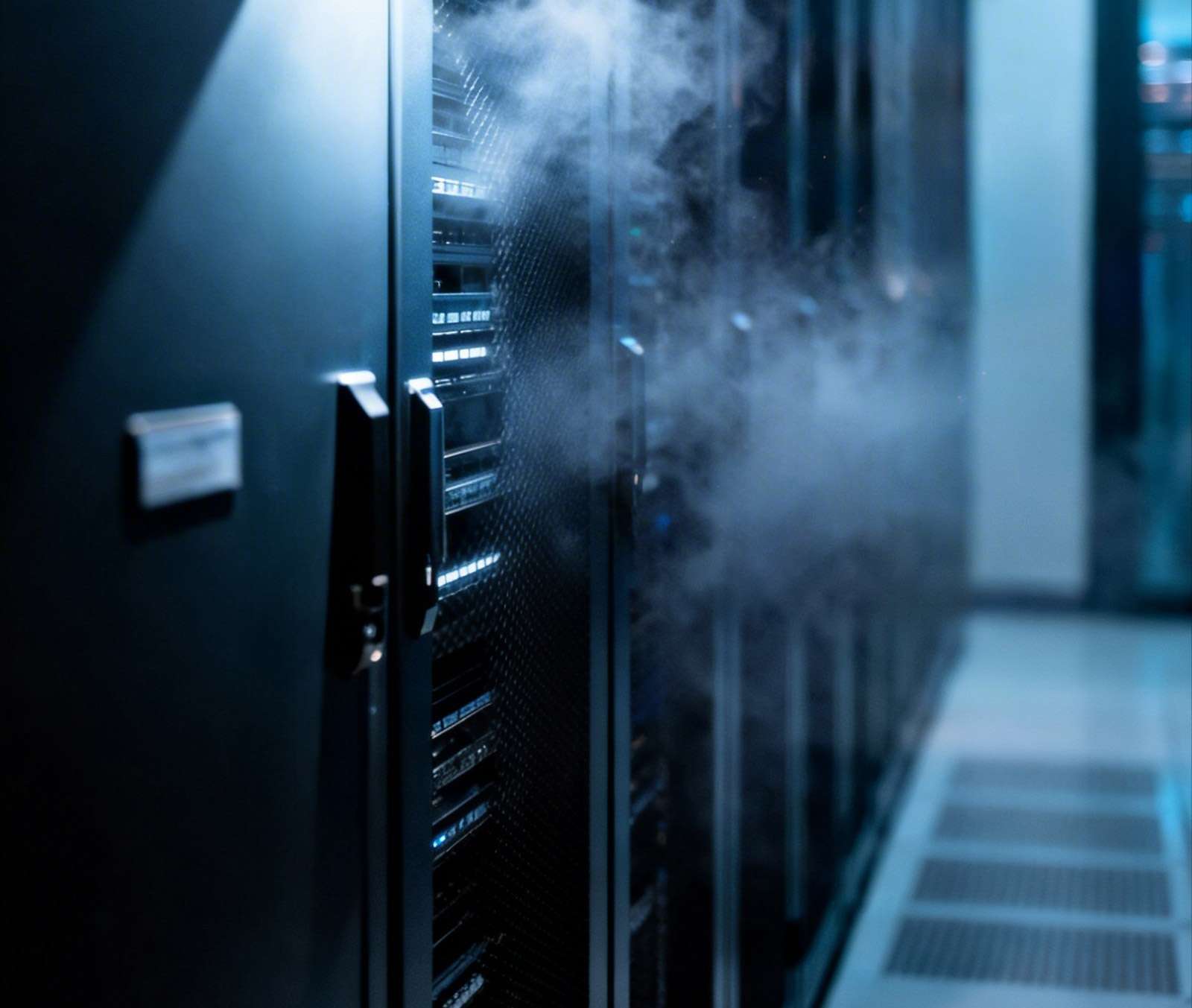
Data centers face intense pressure to cut energy and water consumption, and the refrigerants running their cooling systems are getting scrutiny right alongside the servers themselves. Ammonia provides a compelling alternative to the HFOs currently common in this sector. Ammonia-based systems deliver significant energy savings than comparable HFO systems, a structural cost advantage, not a marginal one. The actual hazards of ammonia are well understood and readily managed with proper engineering and safety systems. Innovative's engineered natural refrigerant systems for data centers deliver exceptional energy efficiency, safety, and long-term reliability, a future-proof answer as synthetic HFO legislation continues to tighten.
Putting It All Together: One Partner for Every Application
Selecting the right natural refrigerant system across multiple facility types and jurisdictions is genuinely complex. The right refrigerant choice depends on the application, the regulatory environment, the available compliance infrastructure, and the long-term cost picture. There is no single answer, but there is a single partner with proven experience across all of them.
Innovative Refrigeration Systems is the world leader in design, fabrication, installation, and service of industrial refrigeration systems for ammonia and CO₂. As a recognized authority on transcritical CO₂ and ammonia refrigeration, Innovative operates as a vertically integrated design-build contractor, providing engineering, compliance, service, and energy solutions for the refrigeration industry across North America.
Ready to Make the Switch to Natural Refrigerant Systems?
Whether your facility faces new compliance deadlines, an ESG mandate, or simply the rising cost of synthetic refrigerant alternatives, Innovative is ready to help you find the right path forward. Contact Innovative's team today to discuss your facility's challenges and how ammonia or CO₂ can move you forward compliantly, efficiently, and with confidence.